Monday, 17 January 2011

Golf Shoe Tips For Golfers Who Walk


Walking the golf course has many benefits compared with riding in a cart. Exercise is the most obvious, followed by less tangible pluses like getting a better feel for the course or avoiding being stuck in a cart with an annoying partner. Some golfers believe their scores improve when walking.

Then again, hauling one's golf bag for 5-7 miles does have drawbacks. The possibility of developing blisters or the painful foot condition called plantar fasciitis, for starters. Fatigue is another, especially for those who play in hot weather or on hilly courses. A properly fitting pair of lightweight golf shoes is one solution to these issues, but there are others.

Let's survey a few ways to combat the potential negative effects of walking the course.

Golf Shoes that are Roomy Yet Snug

Help prevent: Blisters, discomfort

This should go without saying, but how often have you bought a pair of golf shoes - or any shoes - that were a little too loose in the middle, or a bit tight in the toes?

Your golf shoes should have ample room in the toe box. Here's a literal rule of thumb: Make sure there's about one thumbnail's distance (a half-inch or so) between the longest toe's tip and the end of the shoe. Your heel should remain firmly in place as well.

Golfers require extra mid-foot security for stability in the swing; walking golfers, test to ensure your shoes are tight enough in the middle without squeezing the foot.

Golf Shoes with Excellent Support

Help prevent: Plantar fasciitis

Here's the No. 1 thing to know about plantar fasciitis: You don't want it.

Plantar fasciitis (PF) occurs when the plantar fascia tissue, which runs the length of the bottom of the foot, becomes inflamed, causing pain in the heel. Once you've got it, PF can prove difficult to overcome given the amount of time most people spend on their feet.

Walking golfers are certainly susceptible to PF, but it's easily prevented. Test any pair of shoes for plentiful supportive cushioning in the heel, arch and ball of the foot. This keeps the weight distributed evenly and relieves stress on the plantar fascia.

The dedicated walker's golf shoes should also be flexible at the midsole so that the foot rolls naturally from heel to toe, rather than slapping the ground. Another good way to stave off PF is by stretching the feet prior to your round. It's a worthwhile way to spend five minutes.

Breathable, Seamless Shoes and Socks

Help prevent: Blisters

Blisters are bad enough when you've got a cart for carriage. Woe to the golfer who develops a blister while walking 18.

The primary causes of blisters are friction, excess heat and sweaty feet. Friction can be minimized by choosing shoes that fit snugly enough (but not too snugly) to prevent rubbing, feature a soft interior surface and few or no raised seams. Breathability is also key, so look for shoes with a combination of mesh and leather that allow air to pass in and out.

Socks are important, too. Invest in a few pair made from technical, moisture-wicking fabric, rather than absorbent cotton. Leave the frazzled, worn-out socks in the drawer, and apply foot or talcum powder to keep the feet dry.

Wednesday, 12 January 2011

Golf Shoes For Walking 18 Holes


There are plenty of golfers that enjoy walking all 18 holes of the golf course. If you are one of these golfers, you are going to need a pair of golf shoes that will make your walk more enjoyable and much more comfortable.

On average a golf course measures around 4 miles, that is from tee to green. There is much more to this march than walking from tee to green. For example, you have the walk from the clubhouse to the course, the stray shots that go into the rough and hit trees and elsewhere stray shot might go.

By the time you have made the 19 hole you would have walked at least 5 miles on possible hilly terrain with your bagful of clubs.

If you intend to walk the course then a pair of comfortable golf shoes is highly recommended.

Below we have some essential guidelines.

Light Construction

Your shoes should be light for your feet when doing a lot of walking. Major manufacturers have made huge strides when it comes to lightweight materials, making golf shoes weigh as little as 13.8 ounces a piece. Some are made of fabric or synthetic leather and they are also available in real leather.

Waterproof

They need to be waterproof or at the very least water-resistant. Waterproof means there is no way water is getting in your shoes and water-resistant shoes will turn away water for only so long until water seeps into your shoes.

This is a very important feature to have. Walking for 4 hours leaves you a long weather window for rain. Many courses sprinkle their fairways and on the early starts you have the morning dew. You should settle for no less than a one-year waterproof warranty.

Moisture wicking

Not long ago moisture wicking was considered a luxury, now it is possible to dress from head to toe in these materials. Waterproof shoes only stop water getting in from the outside, but what about the moisture your feet create?

Shoes with moisture wicking are a necessity for walking golfers. A special material lining inside draws the moisture away from the feet. It sends it somewhere, but trust us, this concept works very well.

Sock liners

Sock liners normally come with most golf shoes, but in case they do not, invest in a pair made from technical, moisture wicking fabric. Absorbent cotton socks are not recommended as they will not draw the moisture away from your feet.

Flexibility

Wearing stiff shoes on a golf course is completely unacceptable. The manufacturers have used the technology to eliminate inflexibility from golf shoes whether they are made from fabric or leather.

We suggest trying on a pair of shoes that interest you. Take a walk round the shop to get a feel for them.

Memory foam

This is more luxury than necessity, memory foam moulds to the shape of your foot and ankle and is very comfortable for your feet. As we said this is not a necessity but you wont regret it if you splash out on a pair of golf shoes lined with this stuff.

Saturday, 8 January 2011

How To Choose The Right Golf Shoes


Choosing the right golf shoes all comes down to personal choice in what you are wanting. Are you going to be playing in dry or wet weather conditions? Are you wanting fashionable shoes? Are you wanting more comfort for you feet? Or maybe you are wanting a pair that has everything you want.

Your golf shoes should match your personality with what ever that means to you. Lets take a look at what to look out for and what you might not have considered.

You need good traction

At the bottom of your shoes you have several cleats. They are designed to grip a golfer to the ground and stabilize the body when taking a swing. They help you take a powerful, accurate shot and are great on damp surfaces. This will dramatically improve your score card.

Another important place good traction comes into play is in the bunkers. Golfers are not allowed to ground their club in to the sand or take a practice shot and it can be difficult to keep your balance on the sand. You can keep your balance by digging your shoes into the sand in a side to side motion. With this added stability, you should now be ready to take your shot.

Waterproof or water-resistant

It is recommended that golfers own a pair of waterproof golf shoes or at the very least water-resistant. Even in the summer there are days you will be playing on wet turf even if it hasn't rained. You can come across sprinkled fairways and if you like to play an early round of golf you might be playing in the morning dew. Of course if you are playing in wet conditions then it is a no brainer to have waterproof shoes.

Moisture wicking

Waterproof shoes only prevent water getting in your golf shoes, but what about the moisture inside?

Sweat makes moisture wicking shoes a necessity. There is a special lining material that draws the moisture away from the feet. We are not sure where it sends the moisture, but trust us, this concept works very well.

Comfort for your feet

Comfort is probably top of the list. Every golfer wants comfortable feet, especially the walking golfers. If you are a walking golfer you are going to want shoes that are lightweight and flexible. These shoes have lightweight materials that are designed to stop blisters by reducing the friction on your feet.

Look out for EVA (ethyl vinyl acetate) and TPU (thermoplastic urethane). EVA is soft, flexible and shock absorbent, this makes it perfect for shoes. TPU is durable, flexible and makes for a very comfortable experience.

Another comfortable feature is memory foam. This is more luxury than necessity but your feet will thank you. Memory foam conforms to the shape of your feet giving you a very comfortable experience.

Styles and designs

This all comes down to your personal taste. There are plenty of styles and designs to choose from and you can get designs that look very similar to athletic shoes.

Go down to your local golf store or look online for the golf shoes you want and need.

Monday, 28 June 2010

Winners' shoes this week

An advance thanks to anyone who can tell us what shoes Cristie Kerr wore in her stunning LPGA win...

PGA Tour – Travelers Championship
Winner – Bubba Watson
Shoes – FootJoy

European PGA Tour – BMW International Open
Winner – David Horsey
Shoes – FootJoy FJ Icon

Champions Tour – Dick's Sporting Goods Open
Winner – Loren Roberts
Shoes – FootJoy DryJoys

Nationwide Tour – Mexico Open
Winner – Jamie Lovemark
Shoes – Nike Air Zoom Elite

Monday, 21 June 2010

McDowell's win huge for Stuburt

A lesser-known golf shoes brand got a huge boost with Graeme McDowell's U.S. Open win. McDowell strode to victory in shoes made by England-based Stuburt, a company founded in 1860 but now truly on the golf map.

Stuburt's stable of pros includes McDowell's fellow Northern Irishmen Darren Clarke and Gareth Maybin, England's David Howell and prominent female pro Trish Johnson. Over the years, Stuburt has also made shoes for soccer, yachting and ice skating.

Note: We incorrectly reported on June 7 that McDowell wore FootJoys in his win at the Wales Open; Stuburt was his choice.

Friday, 18 June 2010

Golf shoes: Unique models turning heads

The best way to stand out on the golf course is with a sound, smooth swing. This will immediately set you apart from the masses making their lurching, unsightly efforts to get the ball airborne.

If you're not blessed with the grace of an Ernie Els or Sam Snead, you can always resort to an eye-catching ensemble. For those who really want to turn heads and start conversations, there are several golf shoe brands and styles that will do the trick quite nicely.

In addition to traditional styles, today's player can select golf shoes disguised as athletic shoes, skateboard kicks, even sandals and flip-flops. But if it seems the golf shoe has reached its stylistic limits, a few renegade companies beg to differ.

Here's a look at three unique golf shoe models introduced in recent years:

Crocs Ace Golf – Thanks to super chef Mario Batali and his ubiquitous orange clogs, the Crocs brand is known the world over. Not many folks are aware, though, that the company makes a golf shoe in the same style.

The Crocs Ace is a clog featuring the proprietary Croslite material Crocs are famous for. They're light, comfortable and, Crocs claims, extremely stable thanks to an adjustable, heel-hugging Turbo Strap. Circulation nubs are designed to stimulate blood flow while the footbed creates a cushioning, custom fit.

And yes, Crocs Ace golf shoes are equipped with plastic spikes, so don't wear them in the kitchen.

Not only are Crocs a sure conversation starter on the course, they retail for about $40 – half the cost of value-priced traditional golf shoes.

Kikkor Golf -- James Lepp was once a promising golfer. Extremely promising. The British Columbia native claimed the NCAA individual championship in 2005 as a Washington Husky, besting such stars as J.B. Holmes, Ryan Moore and Spencer Levin.

On the way to fortune and fame at the professional level, however, Lepp lost his spark. For playing competitively, that is. So Lepp launched Kikkor, an “alternative golf footwear brand targeting the younger players at heart,” according to its website.

To fill the hipness void left by old-line manufacturers, Kikkor offers its Eppik and Circle shoes. While the patterns and colors are aimed at a youthful audience, Kikkor shoes feature accepted technology like memory foam and flexible, waterproof leather.

The Kikkor website includes comments from fans, one of whom called his new pair of Eppiks “sick.” That means good. We think.

V-Groove Tool Golf Shoe – Now here's one that came out of left field. Actually, it came from Augusta, Ga., home of the Masters and birthplace of the golf cart.

V-Groove Tool footwear is the brainchild of Anthony L. Griffin, a former military man and devout Christian who calls his patented invention “the world's first multifunctional golf shoe.” It has three support pockets specially designed to hold ball markers, divot repair tools and tees – right on the shoe, within easy grabbing range.

Griffin's product actually takes its name from its unusual sole, which features three separate V-shaped patterns: horizontal, vertical, and on the back of the shoe.

Monday, 14 June 2010

Winners' shoes this week

PGA Tour – St. Jude Classic
Winner – Lee Westwood
Shoes – FootJoy FJ Icon

European PGA Tour – Estoril Open de Portugal
Winner – Thomas Bjorn
Shoes – ECCO

LPGA Tour – State Farm Classic (final round postponed)

Note: The Champions and Nationwide Tours took the week off.

Thursday, 10 June 2010

Adidas drapes golf shoes in U.S. flag


You may have noticed that adidas has been on a roll lately. A bevy of pros have worn the company's golf shoes while marching to victory in recent months, including Tim Clarke (The Players), Justin Rose (The Memorial), Tom Lehman (Senior PGA Championship), Jason Day (HP Byron Nelson) and Se Ri Pak (Bell Micro Classic).

The venerable brand isn't resting on its laurels, though. This week, adidas made two announcements it hopes will boost its profile and profits.

First off, the company unveiled a limited edition of its TOUR360 4.0 shoe in a “USA Flag” design, which will be worn by its stable of American pro golfers at the 110th U.S. Open – June 17-20 at Pebble Beach Golf Links – and the 2010 Ryder Cup in Wales.

The shoe features a red, white and blue color scheme and an American flag on the rear quarter. Only 3,500 pairs will be available for retail purchase at a manufacturer's suggested retail price (MSRP) of $180.

Players scheduled to debut the TOUR360 4.0 USA Flag shoe at the U.S. Open include Sean O'Hair, Kenny Perry, Dustin Johnson, Jim Furyk, Fred Funk and Matt Bettencourt. All Yanks, of course.

"Our team of designers and engineers wanted to make a bold statement and showcase to the world the style and innovation that exists behind every adidas golf shoe," said Dave Ortley, Senior Director of Global Footwear.

"Thanks to tremendous tour validation, the adidas golf TOUR360 4.0 is already revered as one of the most successful golf shoes in the industry and we believe this limited edition version will help to build the legendary franchise even more."

Adidas calls the TOUR360 4.0 “the lowest shoe in golf” thanks to its THiNTech cleat and attachment system. The company says this technology is 32% lower than conventional systems, improving stability, balance, power, footwork and feedback.

In addition, adidas has expanded its adiPURE line of apparel and footwear to include women's items. For now, the offerings are limited to shirts, pants, skorts and sweaters. No word yet if and when adiPURE golf shoes for women will be added to the mix.

Friday, 4 June 2010

Golf shoes FAQ, Part II

Turns out our last installment left a few unanswered questions. This Q&A covers a bit more ground...

Q: What are golf shoes made of?

A: Sugar and spice and everything nice. Sorry, that's little girls.

A whole host of natural and synthetic materials make up an ordinary golf shoe. Aside from leather – real or faux – the short list includes thermoplastic urethane (TPU), ethyl vinyl acetate (EVA), and silicone. These space-age products are used to form soles, heels, liners, tongues, collars and other parts and pieces.

Q: I'm a casual kind of guy. Are there golf shoes made to match my personality?

A: Are sandals casual enough for you? How about flip-flops?

Some golf sandals don't include spikes, but most do. And yes, they strap on tight enough to provide ample stability. Golf flip-flops could prove a little trickier, but hey, if you're that laid-back then surely you have an easy-going swing.

Gals who'd rather not dress to the nines for a quick nine can opt for golf sandals, too. A simple web search will turn up dozens of styles.

Q: Is it a hassle to break in new golf shoes?

A: Generally, not at all. Depending on how well they fit, many are comfortable right out of the box. For those that feel a little stiff, the best way to break them in is simply to wear them. Unfortunately, spikes make golf shoes less than ideal indoors, but if you're not embarrassed wearing them in the yard, that's one easy trick.

Q: Are golf shoes high-maintenance?

A: If you want to keep any nice pair of shoes looking sharp, a little extra care is always a good idea.

For starters, put them on using a shoe horn to protect the heel counter and avoid blistering. After the round, wipe down leather or synthetic uppers with a shoe cleaner or mild soap and water. If your shoes are white, use an appropriately colored cleaner to remove blemishes like scuff marks. Polish white or dark shoes after cleaning.

Treat nubuck leather – the kind with a soft, fibrous texture – with a specially made cleaner and brush. By all means, follow the instructions.

For soaked shoes, stuff some newspaper inside to absorb the moisture. Using a hair dryer or sticking your shoes next to a heat source are strongly discouraged. Shoe trees are highly recommended.

Q: How often should I change my spikes?

A: Every three months, or 3,000 miles.

Make that every 10-15 rounds of golf, according to the spike manufacturers. Depending on your gait, spikes on different areas of your soles may wear out faster. Check them every so often and swap out any spikes that have lost more than a quarter or so of length.

Q: Is replacing spikes a difficult process?

A: It's a lot easier than changing your oil. In fact, replacing plastic cleats is a snap compared with the old metal ones. All it takes is a ratchet-like tool made specifically for the job, a couple of twists to pop out the old, a couple more to screw in the new, and voila – your traction is back.

Monday, 31 May 2010

Near sweep for FootJoy this weekend


Shoes worn by winners of major pro tour events, weekend of May 30:

PGA Tour – Crowne Plaza Invitational at Colonial
Winner – Zach Johnson
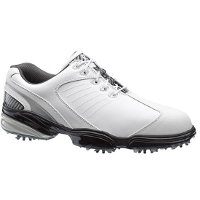
Shoes – FootJoy FJ Sport (1st tour win for this model)

European PGA Tour – Madrid Masters
Winner – Luke Donald
Shoes – FootJoy FJ Icon

Champions Tour – Senior PGA Championship
Winner – Tom Lehman
Shoes – adidas TOUR360 4.0

LPGA Tour – HSBC LPGA Brazil Cup
Winner – Meaghan Francella
Shoes – FootJoy